
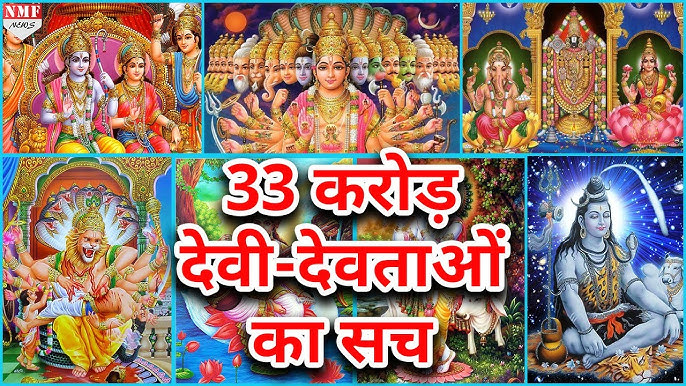
✨ 33 करोड़ देवी-देवताओं की अवधारणा: एक शास्त्रीय विवेचनात्मक स्पष्टीकरण
"हिन्दू धर्म में 33 करोड़ देवी-देवता होते हैं" — यह कथन आज के समय में व्यापक रूप से प्रचारित है, किंतु शास्त्रों की गहन समीक्षा करने पर यह बात स्पष्ट होती है कि यह धारणा भ्रामक और अपूर्ण ज्ञान पर आधारित है। यह एक ऐसा विषय है जिसमें विगत वर्षों तक समाज में स्पष्टता का अभाव था। हालाँकि, आधुनिक समय में इस विषय पर कुछ जागरूकता अवश्य आई है, लेकिन फिर भी अधिकांश लोगों को इस प्रसंग के सही वैदिक सन्दर्भ और भाषिक विश्लेषण की जानकारी नहीं है।
इस भ्रम की मुख्य वजह है "कोटि" शब्द का अनुचित अनुवाद। संस्कृत में "कोटि" शब्द के दो प्रमुख अर्थ होते हैं:
-
करोड़ (10 million)
-
प्रकार / श्रेणी (category or class)
बहुधा अनुवादकों — विशेष रूप से अंग्रेज़ी भाषी विद्वानों — ने "कोटि" का अर्थ केवल "करोड़" के रूप में किया, जिससे यह भ्रांति फैल गई कि हिन्दू धर्म 33 करोड़ देवी-देवताओं की पूजा करता है।
📜 वास्तविक वैदिक सन्दर्भ:
🔹 ऋग्वेद संहिता (मंडल 1, सूक्त 45, श्लोक 2):
श्रुष्टीवानो हि दाशुषे देवा अग्ने विचेतसः।
तान् रोहिदश्व गिरवणस्त्रयस्त्रिंशतमावह॥
भावार्थ:
हे अग्निदेव! विशिष्ट ज्ञान से युक्त देवता यज्ञकर्ता को श्रेष्ठ फल प्रदान करते हैं। हे रोहितवर्ण अश्वधारी अग्निदेव! उन त्रयस्त्रिंशत (33) देवताओं को इस यज्ञस्थल पर आमंत्रित करें।
यहाँ "त्रयस्त्रिंशत" का स्पष्ट अर्थ 33 है — न कि 33 करोड़।
🔹 ऋग्वेद (मंडल 1, सूक्त 34, श्लोक 11):
आ नासत्या त्रिभिरेकादशैः इह
देवेभिर्यातं मधुपेयमश्विना॥
भावार्थ:
हे अश्विनी कुमारों! आप दोनों अन्य 33 देवताओं सहित यज्ञ में मधुपान के लिए पधारें।
यहाँ भी 33 देवताओं का ही उल्लेख है, न कि किसी "करोड़ों" की संख्या का।
🔹 अथर्ववेद (कांड 11, सूक्त 5, श्लोक 3):
एतस्माद्वा ओदनात् त्रयस्त्रिंशत् लोकान् निर्मिमीते प्रजापतिः॥
भावार्थ:
प्रजापति ने इस महिमाशाली ओदन (अन्न) से 33 लोकों या देवताओं की रचना की।
🔹 अथर्ववेद (कांड 10, सूक्त 7, श्लोक 13):
यस्य त्रयस्त्रिंशदंगे सर्वे समाहिताः।
स्कम्भ तं ब्रूहि कतमः स देवः सः॥
भावार्थ:
जिस स्कम्भ (धारक शक्ति) के अंगों में ये 33 देवता प्रतिष्ठित हैं, वह कौन-सा परम देव है, बताइए।
🔍 33 कोटि का वास्तविक अर्थ क्या है?
हिन्दू शास्त्रों में वर्णित 33 देवताओं को "33 कोटि देवता" कहा गया है, जिसमें "कोटि" का अर्थ "प्रकार या श्रेणी" है — न कि "करोड़"। ये 33 देवता निम्नलिखित श्रेणियों में विभाजित हैं:
🔹 12 आदित्य
🔹 11 रुद्र
🔹 8 वसु
🔹 2 अश्विनीकुमार
= कुल: 33 प्रकार के प्रमुख देवता
इनकी पूजा वैदिक परंपरा में की जाती है, और इन्हीं के माध्यम से समस्त ब्रह्मांडीय शक्तियाँ कार्यरत मानी जाती हैं। ये देवता प्रकृति, तत्व, ब्रह्मांडीय क्रियाओं और जीवन चक्र के प्रतिनिधि हैं।
🚫 33 करोड़ का भ्रांतिपूर्ण प्रचार कैसे फैला?
यह भ्रांति मुख्यतः निम्न कारणों से फैली:
-
अनुवाद की भूल: "कोटि" शब्द का अर्थ केवल "करोड़" मानकर किया गया त्रुटिपूर्ण अनुवाद।
-
अज्ञानता: पश्चिमी विद्वानों और कुछ आधुनिक शिक्षित वर्गों द्वारा वेदों का आंशिक अध्ययन।
-
संदर्भहीन उद्धरण: ऋग्वेद के एक ही श्लोक को आधार मानकर व्यापक निष्कर्ष निकालना, जबकि अन्य वेदों और श्लोकों की अनदेखी की गई।
✅ निष्कर्ष:
"हिन्दू धर्म में 33 करोड़ देवी-देवता हैं" — यह शास्त्रीय रूप से प्रमाणित नहीं है। वेदों, उपनिषदों और पुराणों के विश्लेषण से यह सिद्ध होता है कि "33 कोटि" का अर्थ "33 प्रकार के देवता" है, न कि "33 करोड़ देवता"।
यह 33 देवता — जिनमें वसु, रुद्र, आदित्य और अश्विनीकुमार सम्मिलित हैं — प्रकृति और ब्रह्मांड के विभिन्न अंगों और शक्तियों के प्रतीक हैं। इनकी उपासना के माध्यम से हिन्दू धर्म ब्रह्मांड की समग्रता, विविधता और दिव्यता को एकीकृत रूप में स्वीकार करता है।
🌼 33 कोटि देवी-देवताओं की वास्तविकता: वैदिक व तात्त्विक दृष्टिकोण
🔍 प्रश्न: क्या हिन्दू धर्म में 33 करोड़ देवी-देवता हैं?
यह प्रश्न कई वर्षों तक भ्रम और विवाद का विषय बना रहा है। हालाँकि आधुनिक समाज में इस विषय पर कुछ जानकारी अवश्य फैली है, परंतु अभी भी अधिकतर लोग इस बात को लेकर भ्रमित हैं कि हिन्दू धर्म वास्तव में कितने देवी-देवताओं की मान्यता देता है। विशेष रूप से “33 कोटि देवता” को “33 करोड़ देवी-देवता” मान लेने की एक प्रचलित परंतु भ्रामक धारणा रही है।
🕉️ 'कोटि' शब्द का यथार्थ अर्थ: करोड़ या प्रकार?
संस्कृत में "कोटि (कोटि)" शब्द के दो प्रमुख अर्थ होते हैं:
-
करोड़ (10 million)
-
प्रकार / श्रेणी (Category / Class)
विदेशी विद्वानों, विशेष रूप से अंग्रेज़ी अनुवादकों ने इस शब्द का अर्थ केवल “करोड़” के रूप में प्रस्तुत किया, जिससे यह धारणा बनी कि हिन्दू धर्म में 33 करोड़ देवी-देवता हैं। जबकि वेदों और उपनिषदों में 'कोटि' शब्द का संदर्भ ‘प्रकार’ या 'वर्ग' के अर्थ में है, जो स्पष्ट वैदिक प्रमाणों से सिद्ध होता है।
📜 वेदों में 33 कोटि (प्रकार) देवताओं के प्रमाण
✅ 1. ऋग्वेद संहिता — मंडल 1, सूक्त 45, मंत्र 2:
श्रुष्टीवानो हि दाशुषे देवा अग्ने विचेतसः ।
तान् रोहिदश्व गिर्वणस्त्रयस्त्रिंशतमा वह॥
भावार्थ: हे अग्निदेव! आप 33 श्रेणी के प्रबुद्ध देवताओं को यज्ञस्थल पर आमंत्रित करें।
✅ 2. ऋग्वेद — मंडल 1, सूक्त 34, मंत्र 11:
आ नासत्या त्रिभिरेकादशै: इह देवेभिर्यातं मधुपेयमश्विना॥
भावार्थ: हे अश्विनीकुमार! आप 33 देवताओं सहित यज्ञ में पधारें और मधुपान करें।
✅ 3. अथर्ववेद संहिता — कांड 11, सूक्त 5, मंत्र 3 (ओदन सूक्त):
एतस्माद वा ओदनात त्रयस्त्रिंशत् लोकान् निर्मिमीते प्रजापतिः॥
भावार्थ: प्रजापति ने इस ओदन (पवित्र अन्न) से 33 लोकों या देवताओं की रचना की।
✅ 4. अथर्ववेद संहिता — कांड 10, सूक्त 7, मंत्र 13:
यस्य त्रयस्त्रिंशदंगे सर्वे समाहिताः। स्कम्भ तं ब्रूहि कतमः स देवः सः॥
भावार्थ: वह कौन-सा देव (स्कम्भ) है, जिसके अंगों में सभी 33 देवता स्थित हैं?
🧠 शास्त्रीय गणना: 33 कोटि देवता कौन हैं?
इस प्रश्न का स्पष्ट उत्तर बृहदारण्यकोपनिषद (अध्याय 3, ब्राह्मण 9) में मिलता है।
यहाँ याज्ञवल्क्य और शाकल्य के संवाद में देवताओं की संख्या की विवेचना की गई है।
याज्ञवल्क्य कहते हैं कि:
🔹 33 कोटि देवता इस प्रकार हैं:
| वर्ग | विवरण |
|---|---|
| 8 वसु | सूर्य, चन्द्रमा, नक्षत्र, पृथ्वी, जल, अग्नि, वायु, आकाश |
| 11 रुद्र | 10 प्राण + 1 जीवात्मा |
| 12 आदित्य | 12 मास (सूर्य के रूप) |
| 1 इंद्र | देवों के राजा |
| 1 प्रजापति | सृष्टिकर्ता ब्रह्मा |
➡️ कुल = 8 + 11 + 12 + 1 + 1 = 33 देवता (प्रकार)
📘 अग्नि पुराण में 33 देवताओं की अन्य सूची:
| वर्ग | देवता |
|---|---|
| 8 वसु | आप, ध्रुव, सोम, धर, अनिल, अनल, प्रत्युष, प्रभास |
| 11 रुद्र | हर, बहुरूप, त्र्यंबक, अपराजित, वृषाकापि, शम्भु, कपर्दी, रेवत, मृगव्याध, शर्व, कपाली |
| 12 आदित्य | विष्णु, इन्द्र, त्वष्टा, धाता, अर्यमा, पूषा, विवस्वान, सविता, मित्र, वरुण, भग, अंशु |
| + इन्द्र + प्रजापति | कुल 33 प्रकार |
❗ 33 करोड़ का भ्रम कैसे फैला?
-
अनुवाद की भूल: 'कोटि' का अर्थ केवल 'करोड़' मान लिया गया।
-
पश्चिमी दृष्टिकोण: अंग्रेज़ अनुवादकों ने बिना शास्त्र-संदर्भों के भावार्थ प्रस्तुत किया।
-
जन सामान्य में जानकारी का अभाव: जिस कारण यह भ्रांति बार-बार दोहराई जाती रही।
🕯️ निष्कर्ष:
“33 कोटि देवी-देवता” का अर्थ 33 करोड़ देवता नहीं, बल्कि 33 श्रेणियाँ या प्रकार के देवता है, जिनकी पुष्टि ऋग्वेद, अथर्ववेद, बृहदारण्यकोपनिषद, और अग्निपुराण जैसे मूल ग्रंथों से होती है।
इन 33 प्रकार के देवताओं के माध्यम से हिन्दू धर्म प्रकृति, ब्रह्मांड और जीवन की विविध शक्तियों को एकीकृत दृष्टि से देखता है, जो एक ही परम तत्व (ब्रह्म) की विभिन्न अभिव्यक्तियाँ हैं।
.jpg?timestamp=1747687459233)
✨ The Myth of 33 Crore Gods in Hinduism: A Vedic Clarification
The widespread belief that Hinduism worships 33 crore (330 million) gods is a misconception that has persisted largely due to translation errors, partial understanding, and lack of scriptural study. For many years, this question remained ambiguous, and even today, much of what is known among the general public is either incomplete or inaccurate.
At the heart of this confusion lies the Sanskrit word “Koṭi” (कोटि), which has two distinct meanings:
-
Crore (10 million)
-
Category or Type / Class / Division
Unfortunately, many early translators — particularly Western scholars unfamiliar with the deeper nuances of Sanskrit and Vedic literature — interpreted “33 Koṭi Devas” as “33 crore (330 million) gods”, without recognizing the alternative and contextually correct meaning: “33 types or categories of divine beings.”
📜 What Do the Vedas Actually Say?
🔹 Rigveda Samhita – Mandala 1, Sukta 45, Mantra 2:
śruṣṭīvāno hi dāśuṣe devā agne vicetasaḥ |
tān rohi-daśva girvaṇaḥ trayastriṁśatam āvaha ||
Translation:
O Agni, bring to this sacred fire those 33 intelligent and praiseworthy gods who bestow blessings upon the yajamana (sacrificer).
Here, the term “trayastrinśatam” clearly refers to 33, not 330 million.
🔹 Rigveda – Mandala 1, Sukta 34, Mantra 11:
ā nāsatyā tribhir ekādaśair iha devebhir yātaṁ madhupeyamaśvinā ||
Translation:
O Ashvini Kumars! Accompanied by the 33 gods, may you arrive at this yajna to drink the sweet Soma and grant us longevity and protection from sin.
Again, we see direct reference to 33 deities, not crores.
🔹 Atharvaveda – Book 11, Hymn 5, Mantra 3:
etasmād vā odanāt trayastriṁśan lokān nirmimīta prajāpatīḥ ||
Translation:
From this sacred food (Odan), Prajapati created 33 worlds or divine beings.
🔹 Atharvaveda – Book 10, Hymn 7, Mantra 13:
yasya trayastriṁśad aṅge sarve samāhitāḥ |
skambha taṁ brūhi katamaḥ sa devāsaḥ ||
Translation:
In whose limbs dwell all the 33 gods, tell us about that Skambha (cosmic pillar/divine essence).
🔍 What Are the 33 Types of Gods in Hinduism?
According to Vedic literature, the term “33 Koṭi Devas” refers to 33 categories or divisions of divine forces, not 330 million individual deities. These 33 are:
-
🔸 8 Vasus – Elemental gods (Earth, Fire, Wind, Sky, etc.)
-
🔸 11 Rudras – Manifestations of Shiva (representing various aspects of life and dissolution)
-
🔸 12 Adityas – Solar deities or aspects of cosmic order
-
🔸 2 Ashvins – Twin gods of health and medicine
➡️ Total: 33 categories of divine manifestations
Each of these represents a cosmic function or principle in nature and the universe. They are not individual gods but representative archetypes of creation, preservation, and transformation.
❌ How Did the Misconception Spread?
-
Translation Errors: Misinterpreting “Koṭi” exclusively as “crore” without considering contextual meaning.
-
Lack of Scriptural Study: Relying on a single verse from Rigveda without analyzing others from Rigveda, Atharvaveda, or Upanishads.
-
Colonial-era Interpretations: Western scholars with limited knowledge of Sanskrit and Vedic philosophy often misrepresented Hindu concepts.
-
General Ignorance: Mass transmission of information without fact-checking scriptural authenticity.
✅ Conclusion: What Is the Truth?
The claim that Hinduism believes in 33 crore gods is not supported by the Vedas or Upanishads. The original texts consistently refer to 33 classes or categories of divine energies, not crores of individual gods.
These 33 categories encompass all aspects of the universe — from natural elements and moral principles to life-giving forces and cosmic balance. Hinduism recognizes that the divine manifests in countless forms, but that doesn't equate to worshiping 330 million separate deities. Rather, it emphasizes the diverse expressions of one Supreme Reality (Brahman).
🌼 Are There 33 Crore Gods in Hinduism? A Vedic and Philosophical Clarification
❓ The Common Misconception
The belief that Hinduism acknowledges 33 crore (330 million) gods is a widespread misunderstanding, primarily due to mistranslations, partial interpretations, and lack of scriptural study. While some awareness has emerged in recent years, most people — even many practicing Hindus — remain unaware of the original Vedic intent behind the phrase "33 Koti Devas."
📖 Understanding the Word ‘Koti’: Crore or Category?
In Sanskrit, the word ‘Koti’ (कोटि) has two meanings:
-
Crore (i.e., 10 million)
-
Type / Class / Category
Due to early mistranslations — especially by Western scholars and English translators — the phrase “33 Koti Devas” was incorrectly interpreted as “330 million gods” rather than “33 categories or types of divine beings.” This error led to the false idea that Hinduism is a polytheistic religion with hundreds of millions of deities.
📜 What Do the Vedas Really Say?
Multiple verses across Rigveda and Atharvaveda clarify that the number 33 refers to types or categories of divine forces, not individual deities.
🔹 Rigveda – Mandala 1, Sukta 45, Mantra 2:
śruṣṭīvāno hi dāśuṣe devā agne vicetasaḥ ।
tān rohi-daśva girvaṇaḥ trayastriṁśatam āvaha ॥
Translation:
O Agni, bring to this sacred yajna the 33 categories of wise and knowledgeable gods who grant blessings to the yajamana (sacrificer).
🔹 Rigveda – Mandala 1, Sukta 34, Mantra 11:
ā nāsatyā tribhir ekādaśair iha devebhir yātaṁ madhupeyamaśvinā ॥
Translation:
O Ashwini Kumaras, accompanied by the 33 deities, arrive here to partake of the sweet Soma and bless us with longevity and protection.
🔹 Atharvaveda – Book 11, Hymn 5, Mantra 3 (Odan Sukta):
etasmād vā odanāt trayastriṁśan lokān nirmimīta prajāpatīḥ ॥
Translation:
From this sacred food (Odan), Prajapati created the 33 worlds or realms — symbolic of the divine classes.
🔹 Atharvaveda – Book 10, Hymn 7, Mantra 13:
yasya trayastriṁśad aṅge sarve samāhitāḥ।
skambha taṁ brūhi katamaḥ sa devāsaḥ॥
Translation:
Tell us about that Skambha (divine pillar), within whose body all 33 categories of deities are established.
📚 Who Are the 33 Koti (Types) of Deities?
The detailed classification of these 33 divine types is explained in the Brihadaranyaka Upanishad (Chapter 3, Brahmana 9). In a dialogue, the sage Yājñavalkya explains the breakdown of the divine categories to the scholar Śākalya:
🔸 Breakdown of the 33 Deities:
| Category | Description |
|---|---|
| 8 Vasus | Fire (Agni), Water (Apas), Earth (Prithvi), Air (Vayu), Sky (Akash), Sun (Surya), Moon (Chandra), Stars (Nakshatras) |
| 11 Rudras | 10 Vital energies (Pranas) + 1 Jiva (individual soul) |
| 12 Adityas | 12 solar manifestations or months of the year |
| 1 Indra | King of gods |
| 1 Prajapati | The Creator or Lord of creatures (Brahma) |
➡️ Total = 8 + 11 + 12 + 1 + 1 = 33 divine types
📘 Agni Purana's Version of the 33 Types:
| Type | Names |
|---|---|
| 8 Vasus | Aap, Dhruva, Soma, Dhar, Anila, Anala, Pratyusha, Prabhasa |
| 11 Rudras | Hara, Bahurupa, Tryambaka, Aparajita, Vrishakapi, Shambhu, Kapardi, Revata, Mrigavyadha, Sharva, Kapali |
| 12 Adityas | Vishnu, Indra, Tvashta, Dhata, Aryama, Pusha, Vivasvan, Savita, Mitra, Varuna, Bhaga, Anshu |
| + Indra + Prajapati | Total = 33 divine classes |
❗ Why the Misunderstanding?
-
Translation errors: Mistaking “Koti” as only “crore” rather than “type”.
-
Lack of contextual interpretation: Ignoring other Vedic verses that clarify the correct meaning.
-
Western assumptions: Colonial-era translators applied monotheistic or polytheistic biases.
-
Oral myths over time: The incorrect interpretation spread and became commonly accepted.
🕯️ Conclusion: The True Meaning of '33 Koti Devas'
The idea that Hinduism has 330 million gods is a myth, not supported by any core Vedic scripture.
Instead, the phrase “33 Koti Devas” refers to 33 classes of divine principles, each representing an aspect of the universe — cosmic functions, energies, seasons, life forces, and elemental powers. These divine forms are not separate “gods,” but manifestations of the One Supreme Reality (Brahman).